

The Story of 9 Neil Road
Before it was a tea house, it was the house that showed Singapore its shophouses could be saved.

Before it was a tea house, it was the house that showed Singapore its shophouses could be saved.
Every pot we pour at Tea Chapter is poured inside a piece of Singapore's history. Our home at 9 Neil Road was the very first shophouse restored under the Urban Redevelopment Authority's pilot conservation project in Tanjong Pagar, the house chosen to prove that the old streets of Chinatown were worth keeping.
This is its story: how a crumbling two-storey shophouse with a collapsed roof became the model for the restoration of shophouses across the island, and how, nine days after a group of tea lovers opened its doors, it welcomed Queen Elizabeth II for a cup of tea.
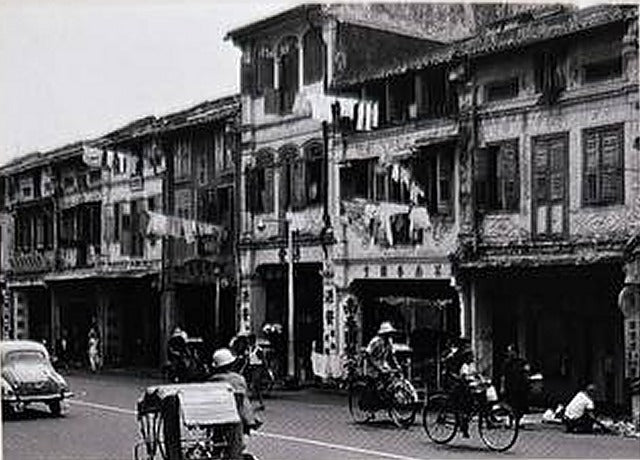
Tanjong Pagar
Tanjong Pagar, at the edge of Chinatown, is rich in 19th-century urban heritage. Its rows of shophouses once rang with trade, rickshaw pullers and family life, but in the decades after the Second World War they were left to decline. Many Singaporeans had only ever seen these buildings run-down, crowded and weathered.
By the 1980s, the question was whether such buildings had a future at all. Restoring them had never been tried on this scale, and nobody knew whether it could be done well, or whether it would pay.
The pilot project · 1987 to 1988
Spearheaded by the Urban Redevelopment Authority, the restoration of 32 state-owned shophouses in Tanjong Pagar was the first project undertaken by the government to show that restoring our heritage buildings was both technically possible and commercially viable.
The project had a second purpose too: to show the public and the building industry what these houses really looked like beneath decades of grime, so that the planned gazetting of Singapore's first conservation areas would win public support.
When the restoration contract was awarded in May 1987, it carried an unusual clause. One unit had to be restored first, before work could begin on the other 31. That house would be the demonstration unit: the one that set the standard for restoring shophouses in Tanjong Pagar and the rest of Singapore. Its work was monitored closely, so that finishing materials could be tested, working methods refined, problems solved and the standard of craftsmanship fixed for every house that followed.
No. 9 Neil Road was chosen. Its external façade carried unusually rich ornamentation, and its timber fascia beam, a vital structural member across the front of the house, was so badly deteriorated that it had to be replaced. The Authority saw this as a golden opportunity to work out a repair method that could be used on every other shophouse with the same problem.
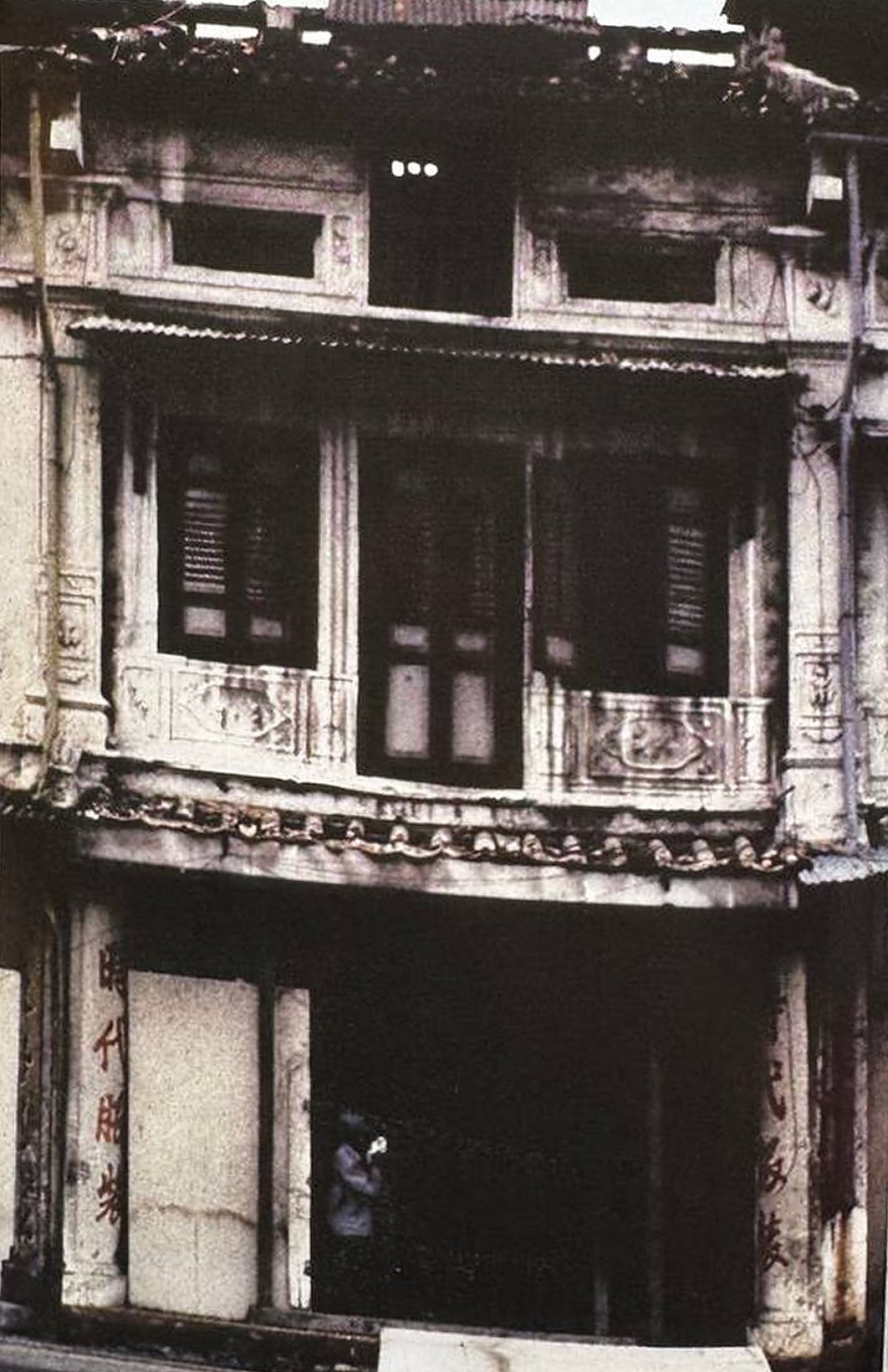
The house before
No. 9 was a two-storey shophouse with an attic floor, and it was in poor condition. A large part of the roof had collapsed. Apart from those on the second storey, none of the windows could be saved, and most of the decorative mouldings on the façade were damaged or missing altogether.
The restorers began with a joint inspection to decide exactly what could be kept. Everything worth retaining was identified, repaired or replaced, and only then was the rest taken down. The guiding idea was simple: keep as much of the original house as possible, and where something had to be replaced, replace it with its like.
“The finished product, a shophouse restored to its original beauty and elegance, was a stunning surprise to many Singaporeans. Many had only ever seen such buildings in their extremely run-down conditions in the post-World War II era.”Urban Redevelopment Authority, Tanjong Pagar restoration record
Restoration works
Many of the techniques worked out at No. 9 became the method for the shophouses that followed.
The original foundations of brick and lime mortar were found to be in good condition. As a precaution, storm water was channelled into drains through down pipes, so that nothing could weaken them.
The timber fascia beam was the only member supporting the entire second-storey façade. Timber pinnings and props held the wall up while the old beam came out and a new one went in. Rotten roof timbers and floor joists were replaced too.
The double-pitched roof was kept, with its tiles, colour and ventilating jack roof. Tanjong Pagar's roofs are pitched below 25°, well under the 29° that clay tiles need to shed heavy rain, so a hidden zinc-aluminium layer now keeps it dry. The plastered ridge, a Teochew and Hokkien feature, was reinstated.
Reopening the airwell let light and air back into the heart of the house. Beneath its parapets lay a surprise: Chinese water-colour frescoes of flowers and birds, hidden under layers of paint and seen again for the first time in years.
Inside, the old plaster was hacked off and the bricks bound with a special chemical, so powdery was the original surface. Outside, cracked plaster was replaced with lime mortar rather than cement, because lime lets the brick walls move and "breathe".
The original timber doors and casement windows, with their fixed and adjustable louvres, were kept wherever possible. Floorboards were replaced with matching timber, and a staircase in keeping with the original was installed.
Remaking the façade's mouldings was the hardest task of all. The craft was no longer practised in Singapore and had to be revived: ceramic flowers and fishes, cut from coloured tiles and set into plaster in the Southern Chinese style known as jian nian (剪粘).
Careful scraping of old paintwork revealed the house's first palette: pastel green and blue, white, creams and buffs, deep red, and the odd splash of lilac. It was repainted in mineral paint, chosen to weather gracefully.
The Tanjong Pagar houses were built back to back, and all that timber made fire a real danger. Back lanes were opened between the rows, new timber was treated against fire, and kitchens were given fire-rated ceilings, alongside new water, power and sanitation.
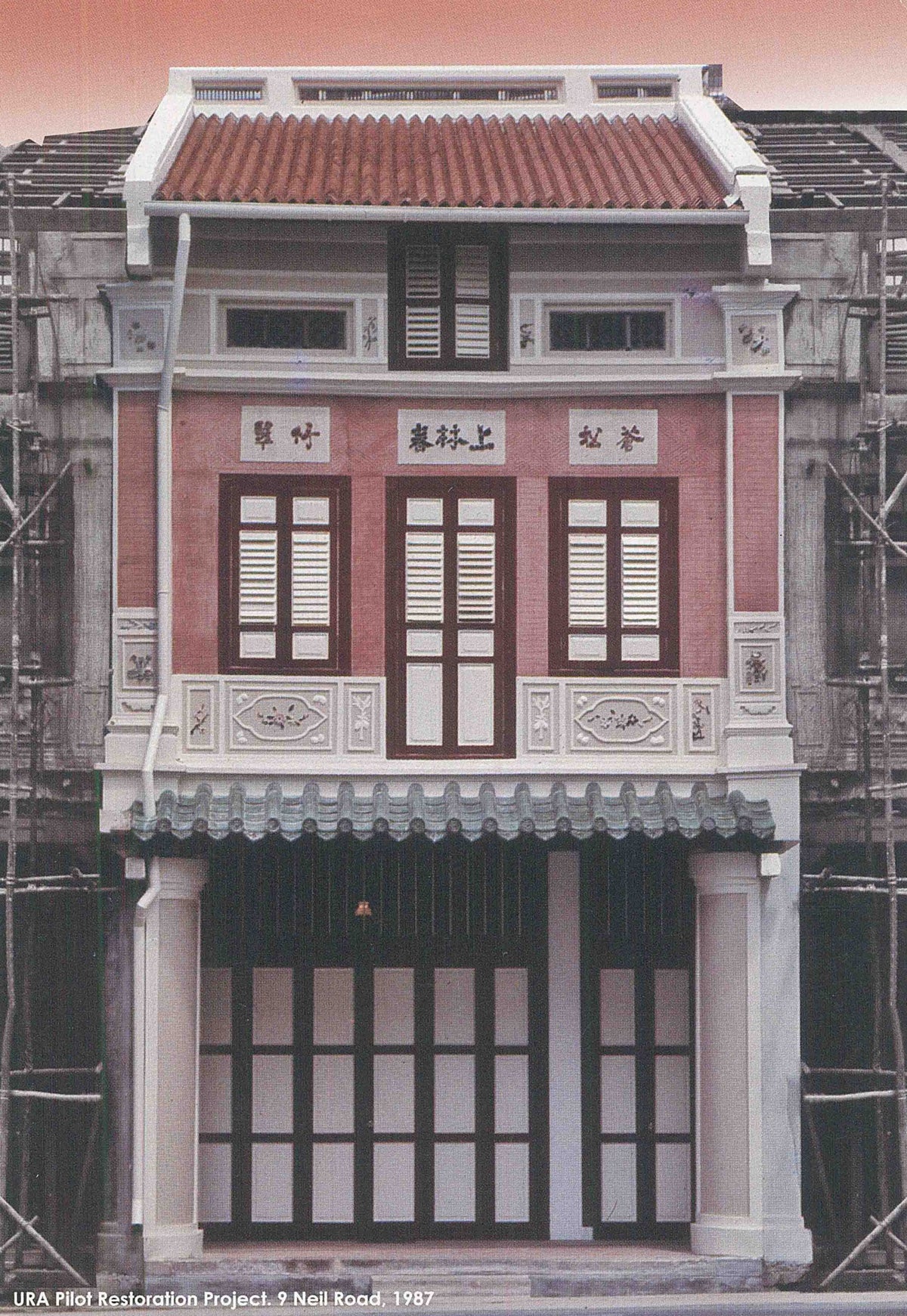
The restored façade
When the scaffolding came down, No. 9 stood as a shophouse of the Second Transitional style, its façade of decorative mouldings, coloured shutters and ceramic ornament looking much as its builders had intended.
It became the showcase for the whole programme. Visitors came to see it, among them Prince Albert of Belgium and Mr S. Dhanabalan, then Minister for National Development. In 1989, Tanjong Pagar was among the first areas in Singapore to be gazetted for conservation.
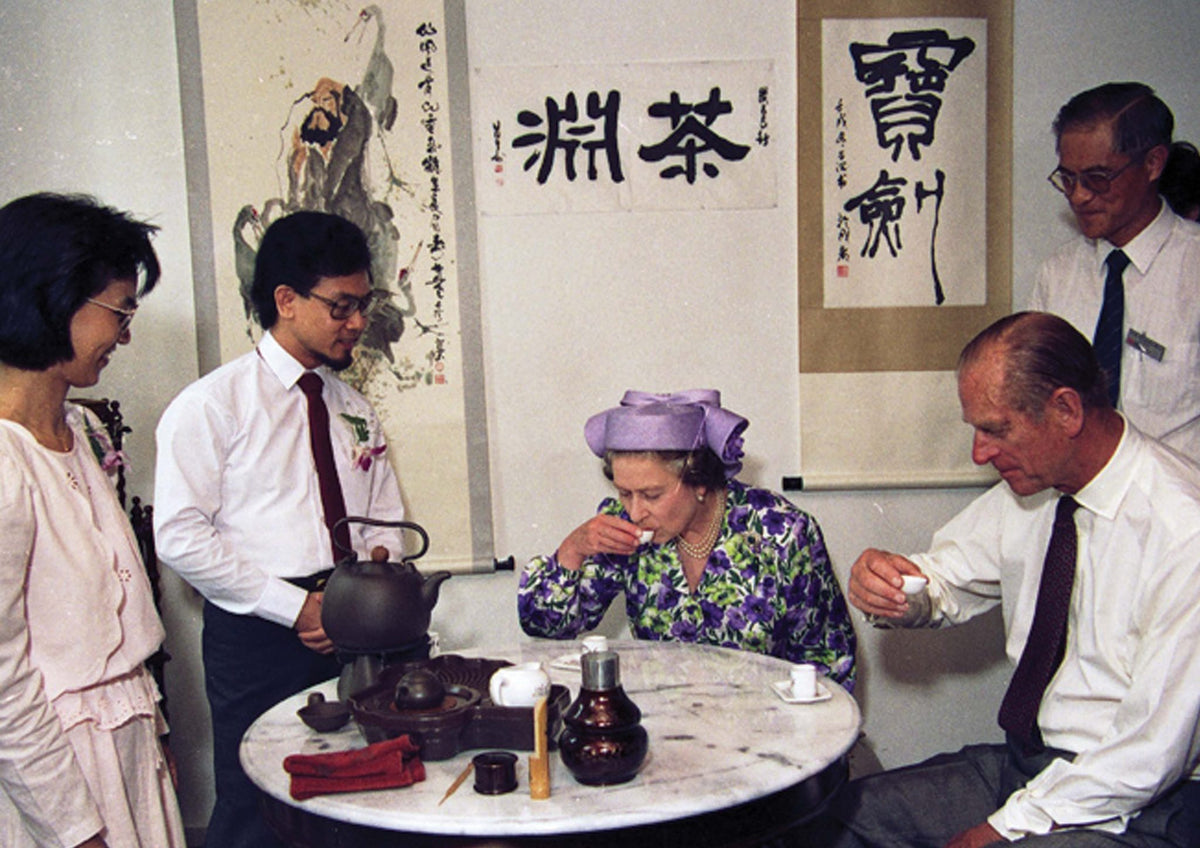
1989 · A tea house is born
The restored house still needed a purpose. On 1 October 1989, thirteen tea lovers, captivated by the Chinese tea ceremony they had come to know through a Taiwanese friend, gave it one. Tea Chapter (茶渊) poured its first pot at 9 Neil Road.
Nine days later, on 10 October 1989, Queen Elizabeth II came to see how the historic district had been restored, and stayed to take tea. The Imperial Golden Cassia (御用黄金贵) poured for her that day remains the tea we offer our honoured guests.
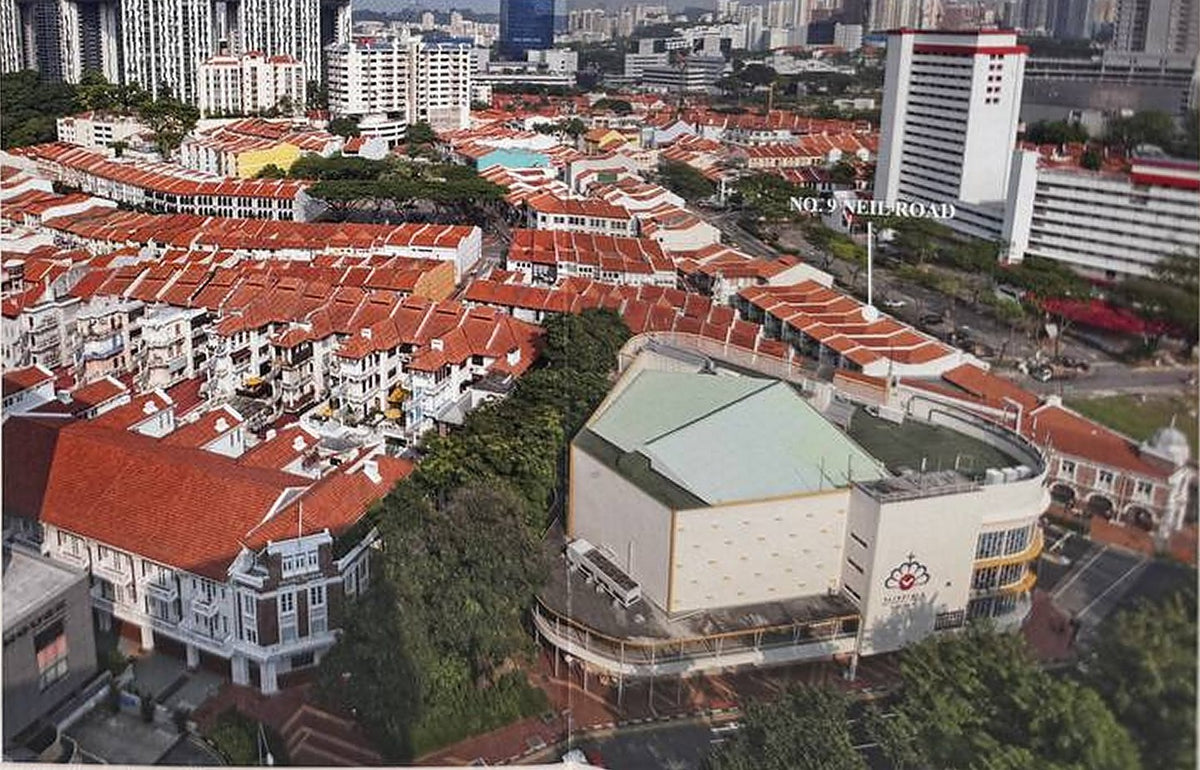
Tanjong Pagar today
What began with one house became a neighbourhood. The 32 pilot shophouses were the first phase of a programme to rejuvenate all 220 state-owned buildings in the Tanjong Pagar Conservation Area, and the lessons learned at No. 9 helped set the standard for conserving shophouses across Singapore.
Today the red-tiled roofs of Tanjong Pagar stretch from Neil Road to Duxton Hill. And at No. 9, the house that went first, the tea is still brewing.
At a glance
Shophouses rise along the streets of Tanjong Pagar, at the edge of Chinatown.
The URA awards the Tanjong Pagar restoration contract. No. 9 Neil Road must be restored first, as the demonstration unit.
The pilot project is completed: 32 shophouses restored for $4.09 million, the first phase of a 220-building programme.
Tanjong Pagar becomes one of Singapore's first gazetted conservation areas.
Thirteen tea lovers open Tea Chapter in the restored house.
Queen Elizabeth II and Prince Philip take tea at 9 Neil Road.
The National Heritage Board names Tea Chapter an SG Heritage Business.
The house is still pouring tea, more than 35 years on.
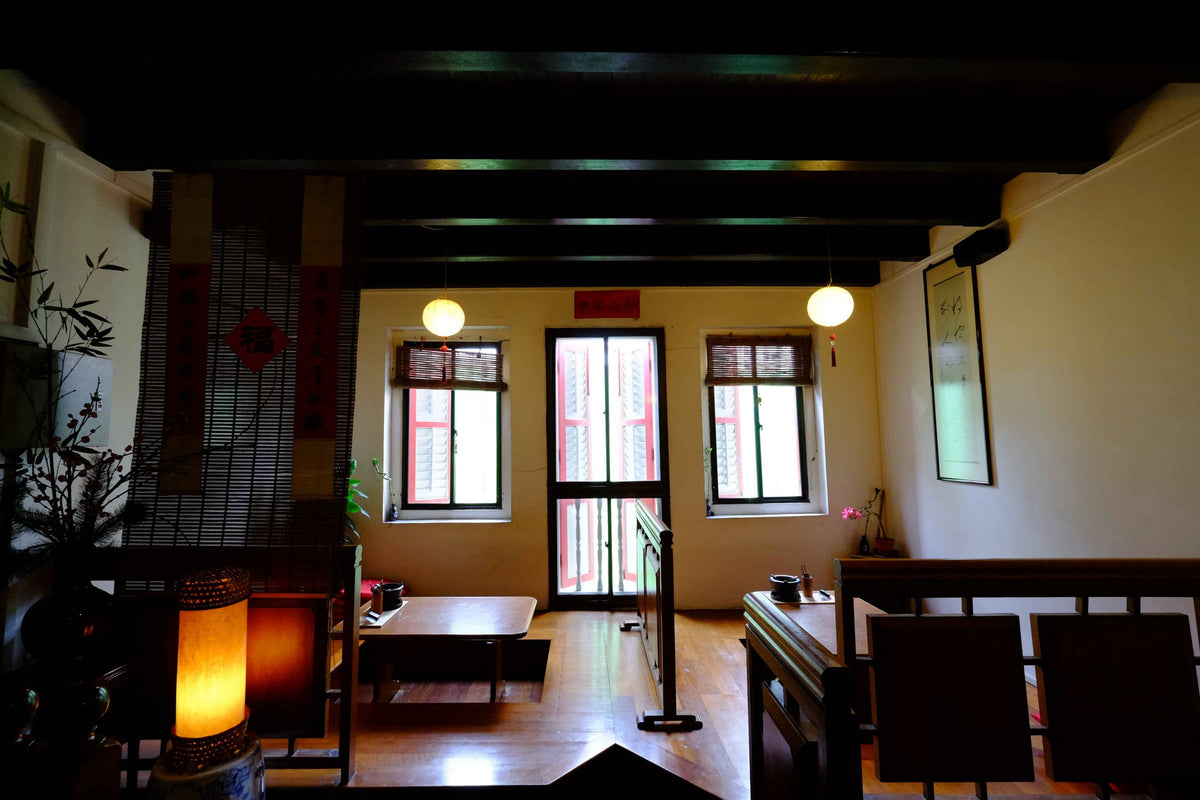
9 Neil Road
The best way to know this house is from the inside, over a pot of tea. Visit the tea house, or learn the art of brewing in one of our workshops.
Historical account and archival photographs from the Urban Redevelopment Authority's record of the Tanjong Pagar pilot restoration project. Photograph of Queen Elizabeth II from the Tea Chapter collection.